• Home
  • IDEAS
  • GROUPS
    • Classical German Philosophy and Phenomenology
    • The quarrel between the ancients and moderns
    • The quarrel between philosophy and poetry
    • Theories of Emotions
    • Philosophies of Image and Imagination
    • Utopia, the Political Myth, and Rebellion
    • The Philosophy of Nature
  • EVENTS
  • PEOPLE
  • ADMISSION
  • CONTACTS
  • CONFERENCES
    • 2016
      • Il tragico nella letteratura tedesca
      • Dialectic and the Ends of Reason
        • Schedule
    • 2015
      • CONVEGNO MELANCOLIA
        • Introduction
        • Schedule
      • CONFERENCE ON THE ANCIENTS
        • Introduction
        • Schedule
      • Immaginazione e Giudizio In Kant
        • Schedule
    • 2014
      • Hegel and the phenomenological movement
  • ODRADEK Journal

Author Archives: Stella Ammaturo

Imagination and affectivity

16 Monday May 2016

Posted by Stella Ammaturo in incontri, suggerimenti eventi

≈ Leave a comment

Tags

affectivity, Alessandra Fussi, Atget, Barthes, Benjamin, D'Angelo, Dottorato di Filosofia, fantasy, Ferber, Ferrarin, Friedlander, Frilli, Fussi, Gipsoteca arte antica Pisa, Husserl, Image-consciousness, imagination, Manca, Nobili, Optical Unconscious, Photography, Productive Imagination, Sadness, Università di Firenze, Università di Pisa, Zanotti

Con piacere Vi informiamo della giornata di studi organizzata dal prof. Alfredo Ferrarin nell’ambito del dottorato in Filosofia delle Università di Pisa e Firenze sul tema

Imagination and Affectivity

di seguito tutte le informazioni

Imagination-affectivity-n

Share this:

  • Click to email a link to a friend (Opens in new window) Email
  • Click to share on Facebook (Opens in new window) Facebook
  • Click to print (Opens in new window) Print
  • Click to share on X (Opens in new window) X
Like Loading...

Conference 2016: Dialectic and the ends of reason

10 Tuesday May 2016

Posted by Stella Ammaturo in convegni

≈ Leave a comment

Tags

Alessandra Fussi, Alfredo Ferrarin, Alice Giuliani, alternative epistemologies, Andreas Arndt, biopolitics, conference 2016, contemporary philosophical debate, Danilo Manca, dialectic, ends of reason, Gianluca Garelli, Giovanna Luciano, Giovanni Zanotti, Guglielmo Califano, Guido Frilli, Gunnar Hindrichs, hermeneutical movement, Iacopo Chiaravalli, Knowledge, Luca Illetterati, Marc Nicolas Sommer, Massimiliano Biscuso, negativity, P. Masciarelli, Phenomenology, philosophy of difference, positivism, pragmatism, praxis, reality, rigid dualisms, Sofie Møller, Stefano Breda, theories of complexity

Pisa, 8-10 June 2016

Aula Savi Orto Botanico (via Porta Buozzi, 3)


PROGRAM DESCRIPTION

Dialectic seems to have disappeared from the contemporary philosophical debate. Indeed, the various aspects of its past fortune – the theory of becoming, the central role of negativity in thought and reality, the critique of abstract negation and of rigid dualisms in every field of knowledge and praxis, a dynamic and developmental view of reason – have all been replaced or transfigured by alternative epistemologies, from time to time: philosophy of difference, hermeneutical movement, positivism, pragmatism, theories of complexity, phenomenology, biopolitics.

At the same time, an instrumental view of reason seems to have emerged and to have imposed itself: reason is generally conceived as a tool on behalf of independent ends and judgments. Other faculties and needs – be they individual or social – impose their own legislation upon it. According to such an instrumental paradigm, reason is the mere spectator of an activity taking place in other dimensions: sensation, passion, revelation, tradition, political authority, as well as life, history or language. By being useful only to the purpose of a confirmation of the formal coherence of propositions and interpretations, reason lacks all autonomous vocation or grip on the world.

In light of such a scenario, the conference brings forward the hypothesis that the possibility of a different conception of reason is historically and theoretically bound to the possibility of dialectics. From a dialectical point of view, reason has indeed its own interests, needs and manifestation powers, revealing itself through its cognitive and self-structuring attitude. According to this view, reason is not just a calculating tool led by external forces but moves itself by its internal ways of being and realization: dialectical reason is active by itself, and its goals are expressions of its own living interests.

The conference aims at rethinking and bringing back to the agenda the bond between reason and dialectic, between a thought able to measure up to contradiction and reason as an autonomous and free reality.

Schedule
Location

Share this:

  • Click to email a link to a friend (Opens in new window) Email
  • Click to share on Facebook (Opens in new window) Facebook
  • Click to print (Opens in new window) Print
  • Click to share on X (Opens in new window) X
Like Loading...

CFP – Odradek “Like a novel: crossing perspectives between knowing, story and digression”

25 Friday Mar 2016

Posted by Stella Ammaturo in CFA-CFP

≈ Leave a comment

Tags

Alessandra Sarchi, Alessandro Cinquegrani, cfp, Davide Bondì, Emmanuelle Danblon, encyclopaedia, fictional way of knowing, History, Knowledge, Matteo Bensi, Matteo Marcheschi, novel, Paolo Rossi, rhetoric, science

CALL FOR PAPER

Like a novel:
crossing perspectives between knowing,
story and digression

Editors: Matteo Bensi (matteobensi@gmail.com) Matteo Marcheschi (marcheschimatteo@gmail.com)

How is it configured and what is nowadays the relationship among novel, story and knowing? What are the conditions, the access roads and starting points of scientific, historical and philosophical research? Which are those of the novel?How are intertwined, not outwardly but theoretically, novel and philosophy? And what about romance and history,novel and epistemological reflection?

The purpose of this issue is to investigate the ways of addressing the problem of the relationship between narration, truth and fiction in the novel, in historical research, in philosophy and in science.

Other questions are the following: What would be the differences between a novel and a scientific paper? What kind of narrative models are available to the historian or to the scientist? What is the cognitive effect for the researcher and for the narrator stemming from the choice of one or the other model?

The problem to be solved is still to find a way to the universal, to a temporary synthesis, hard to get to without recasting the relationship and the interaction between the true, the false and the fiction (Ginzburg, Mazzarella).The path of the scientific research is not very different from that of the novelist, littered as it is of false and fake, fragments, traces and spies (Ginzburg);all this elements are all seemingly insignificant details, but they are often able to open new scenarios and perspicuous representations (Wittgenstein) letting set generalizations that do not lose the concreteness of their starting point. The universal element to explore appears as more similar to the part for the whole than to the whole for one of its parts.

In the background of all this, the third issue of Odradek aims to question the possibility that the study of the novel, of its means and its techniques, could provide an easy way to answer the questions posed above: if the meta-narration – the auto-reflection of novel itself on its knowing status – it is not only a characteristic of postmodern narrative, but a constitutive element of the novel tout court (Shklovkij, Bachtin), then the possibility of an inquiry on the “novel” as a “a way of knowing” is open.

This call encourages papers focusing on the question of the poetic origin of the novel, by adopting a multidisciplinary perspective: at issue will be not only a historical reconstruction of the genesis of the novel, but an investigation into its theoretical value, into the contribution novel gives, can give and has given to the philosophical, artistic, historical and scientificknowledge.

Influenced by Nietzschen genealogical critique of the truth, the 20th thought has questioned the possibility of a form of human knowledge characterized by clarity and certainty.The boundaries between subject and object, observer and observed object, cause and effect have become hazy. This leads to reaffirm the value of the cognitive processes by going to the detriment of their outcome. The 20th century novel sees the affirmation of the metaphor and rhetoric at the expense of rigorous logical argumentation.

In light of this, the 20th century epistemology reflected on the constitutive role of metaphor in scientific thought (T.S. Kuhn) and on that of the autobiographical story in the biological constitution of living (Gould; Bocchi-Ceruti);history, even without coming to the radical conclusions of Metahistory (H. White), has tried to stage the image of its gears, by emphasizing the traits of a study made of detours, blocked roads, prejudices and errors (Ginzburg and Prosperi);fiction revealed its genetic processes, combining and messing up, in the manner of Borges and Calvino.

Moreover, by recognizing themselves in the dizzying analogy of truth and fiction (Diderot), he different fields of knowledge had to deal with what really owns the novel: the power to create a knowledge avoiding the coarse mesh of true and false, by ranking instead in terms of what is neither true nor false but plausible (Halliwell).

In this perspective, the novel ceases to be placed on the ground of absolute otherness comparing to higher knowledge, sewing up a wound that the history of philosophy has always sought to heal and, at the same time, to reproduce. Thus, one can advance the hypothesis that narration and philosophical inquiry are getting closer when knowledge has made itself rhetorical and logological knowing (Cassin). Such a knowing would be human because of restless, always reversible and temporary, provincial (local) and atmospheric (Ortega y Gasset; Mazzoni), able to catch a glimpse of the universal in the particular (Auerbach).

We feel the philosophical necessity, on the basis of studies of Perelman, Garin and Fumaroli among others, that history and philosophy, science and literature, focus on their possible poetic (Vico) and artisanal (Sennett) origins – plausible and always changing – by investigating their proximity to the novel as a form of knowledge.
From this, from the perhaps fictional nature of human knowledge, we propose to investigate the encyclopaedic character of this knowledge.

In the manner of Sterne’s Tristram Shandy, human knowledge is made of rewritings – translations and betrayals (Kundera) – and narrations that accompany the main story, subverting the order of what is a priority and what is not. The detail now becomes fruitful path of research, now dead end. Nevertheless, it gives the clear picture of a knowledge always referring to something else, for proximity and morphological distance (Goethe, Wittgenstein). It finally results that the detail, the individual, the fictional, are the only point of view suitable for a generalisation.

The topics of the issue may include, but are not limited to:

1. The origins of the novel: the fictional way of knowing

2. Novel and History: debts, contamination and epistemological proximity

3. Fiction and science: a cognitive proximity

4. Novel and rhetoric: proximity and theoretical distances

5. Novel and fiction: the work questioning the genre, the genre shining through the work

6. Knowledge, novel and encyclopaedia

7. Concept-interpretation and representation (mimesis), the representation-interpretation (mimesis) of the concept

8. Like a novel: the whole emerging from the detail; or the possibility oftelling the general by starting from the particular

Invited Keynote Authors:
Davide Bondì, Università degli studi di Milano
Alessandro Cinquegrani, Università Cà Foscari di Venezia
Emmanuelle Danblon, Université Libre de Bruxelles
Paolo Rossi, Università di Pisa
Alessandra Sarchi


Full papers of accepted abstracts cannot be longer than 40 000 characters (footnote and references included). They should be submitted by 15th June 2016 and prepared for blind peer review.

The full paper must be submitted online via OJS – Open Journal System:

zetesis.cfs.unipi.it/Rivista

Authors can find submission guidelines at the following link:

zetesis.cfs.unipi.it/Rivista/index.php/odradek/about/submissions#onlineSubmissions

All papers will be reviewed according to our peer review process policy:

zetesis.cfs.unipi.it/Rivista/index.php/odradek/about/editorialPolicies#peerReviewProcess

Languages: English, French, German, Italian

Share this:

  • Click to email a link to a friend (Opens in new window) Email
  • Click to share on Facebook (Opens in new window) Facebook
  • Click to print (Opens in new window) Print
  • Click to share on X (Opens in new window) X
Like Loading...

Lezione prof.ssa Angelica Nuzzo

15 Tuesday Mar 2016

Posted by Stella Ammaturo in suggerimenti eventi

≈ Leave a comment

il Centro Zetesis avrà l’onore di ospitare la Prof.ssa Angelica Nuzzo (Brooklyn College of CUNY) per una lezione dal titolo


The Moral Orientation of Practical Reason

 
che si terrà
 
Mercoledì 23 Marzo dalle 14 alle 16 presso l’Aula Savi in Via Porta Buozzi n. 3 (Orto Botanico)


La lezione seguirà le due che la Prof.ssa Nuzzo terrà alla Scuola Normale (Sala Stemmi):
22 Marzo alle 15 (Morality, Ethical Life and the Realization of Freedom in Hegel) e il
23 Marzo alle 10 (The Movement of Advancement in Hegel’s Logic)


Nel contesto del Centro Zetesis, la lezione della Prof.ssa Nuzzo varrà come incontro di preparazione al convegno internazionale “Dialectic and the Ends of Reason” che si terrà a Pisa dall’8 al 10 Giugno.

Share this:

  • Click to email a link to a friend (Opens in new window) Email
  • Click to share on Facebook (Opens in new window) Facebook
  • Click to print (Opens in new window) Print
  • Click to share on X (Opens in new window) X
Like Loading...

Incontri con il prof. Jean-François Kervégan

22 Monday Feb 2016

Posted by Stella Ammaturo in incontri

≈ Leave a comment

Tags

convegno, dialettica, filosofia, hegel, Kervégan, ragione, Scuola Normale Superiore, Università di Pisa, Université Paris

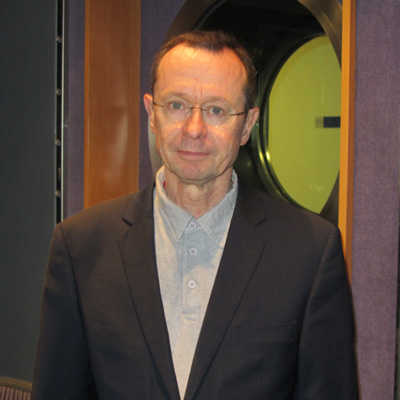
jean-francois-kerveganMartedì 23 febbraio alle ore 10 presso l’aula magna di Palazzo Boileau Zetesis ha l’onore di ospitare una relazione del Prof. Jean-François Kervégan (Université Paris 1 Panthéon-Sorbonne) dal titolo La passion du concept


La relazione del Prof. Kervégan sul pensiero di Hegel sarà il secondo degli incontri in preparazione al convegno di giugno su La dialettica e i fini della ragione.

Inoltre il prof. Kervégan terrà due lezioni presso la Scuola Normale Superiore nei seguenti giorni:

martedì 23 febbraio dalle ore 16.00 alle ore 18.00 in Aula Stemmi

mercoledì 24 febbraio dalle ore 9.00 alle ore 11.00 in Aula Dini


Share this:

  • Click to email a link to a friend (Opens in new window) Email
  • Click to share on Facebook (Opens in new window) Facebook
  • Click to print (Opens in new window) Print
  • Click to share on X (Opens in new window) X
Like Loading...
← Older posts
Newer posts →

Archivio notizie

Menu

  • ADMISSION
  • Una testimonianza per il futuro dopo la tragedia del coronavirus
  • GROUPS
    • Classical German Philosophy and Phenomenology
    • Philosophies of Image and Imagination
    • The Philosophy of Nature
    • The quarrel between philosophy and poetry
    • The quarrel between the ancients and moderns
    • Theories of Emotions
    • Utopia, the Political Myth, and Rebellion
  • CONFERENCES
    • 2019
      • Gli spazi e i tempi della forma: storia naturale delle rovine
    • 2018
      • Sellars e la filosofia post-kantiana
    • 2017
      • Dialettica della ragione, teleologia e idea di mondo in Kant.
      • La filosofia e il tragico
      • La leggibilità della natura
    • 2016
      • Dialectic and the Ends of Reason
        • Schedule
      • Il tragico nella letteratura tedesca
    • 2015
      • Immaginazione e Giudizio In Kant
        • Schedule
      • MELANCOLIA. Metamorfosi dell’umor nero
        • Introduction
        • Schedule
      • THE WISDOM OF THE ANCIENTS. The German-Jewish Revaluation of Ancient Philosophy
        • Introduction
        • Schedule
    • 2014
      • Hegel and the phenomenological movement
  • CONTACTS
  • EVENTS
  • IDEAS
  • ODRADEK Journal
  • PEOPLE
  • PRESS REVIEW
  • RICORDANDO BARALE

Zetesis FanPage

Zetesis FanPage

I nostri eventi

This slideshow requires JavaScript.

Create a free website or blog at WordPress.com.

Privacy & Cookies: This site uses cookies. By continuing to use this website, you agree to their use.
To find out more, including how to control cookies, see here: Cookie Policy
  • Subscribe Subscribed
    • zetesisproject.com
    • Join 27 other subscribers
    • Already have a WordPress.com account? Log in now.
    • zetesisproject.com
    • Subscribe Subscribed
    • Sign up
    • Log in
    • Report this content
    • View site in Reader
    • Manage subscriptions
    • Collapse this bar
 

Loading Comments...
 

    %d