• Home
  • IDEAS
  • GROUPS
    • Classical German Philosophy and Phenomenology
    • The quarrel between the ancients and moderns
    • The quarrel between philosophy and poetry
    • Theories of Emotions
    • Philosophies of Image and Imagination
    • Utopia, the Political Myth, and Rebellion
    • The Philosophy of Nature
  • EVENTS
  • PEOPLE
  • ADMISSION
  • CONTACTS
  • CONFERENCES
    • 2016
      • Il tragico nella letteratura tedesca
      • Dialectic and the Ends of Reason
        • Schedule
    • 2015
      • CONVEGNO MELANCOLIA
        • Introduction
        • Schedule
      • CONFERENCE ON THE ANCIENTS
        • Introduction
        • Schedule
      • Immaginazione e Giudizio In Kant
        • Schedule
    • 2014
      • Hegel and the phenomenological movement
  • ODRADEK Journal

Tag Archives: Kant

NEW ODRADEK CFP: PHILOSOPHUS RIDENS

24 Saturday Jun 2017

Posted by Danilo Manca in CFA-CFP, Odradek

≈ Leave a comment

Tags

Bergson, comedy, commedia, Freud, Hobbes, Kant, laughing philosopher, Laughter, laughter as social phenomenon, Nietzsche, psychology of laughter, riso

CALL FOR PAPERS

Philosophus ridens

ODRADEK

Studies in Philosophy of Literature, Aesthetics and New Media Theories

 Odradek. Studies in Philosophy of Literature, Aesthetics and New Media Theories is an International Journal (http://zetesis.cfs.unipi.it/Rivista/index.php/odradek/index) founded by Zetesis (www.zetesisproject.com) Research Group on the Quarrel between Philosophy and Poetry. Zetesis is a Research Center related to the University of Pisa History, Philosophy, and Arts Department.

 The Journal publishes in online version powered by Open Journal System (OJS)

ISSN: 2465-1060

 Section Editor: Leonardo MASSANTINI
(University of Pisa), leonardomassantini@gmail.com

 Authors are cordially invited to submit papers for the upcoming edition of the Journal that will deal with Philosophus ridens

 Submission deadline: 2nd November 2017

Language: English, German, Italian, French, Spanish, Portuguese.

The paper can be submitted online via OJS – Open Journal System:

http://zetesis.cfs.unipi.it/Rivista/index.php/odradek/index

 Authors can find submission guidelines at the following link:

http://zetesis.cfs.unipi.it/Rivista/index.php/odradek/about/submissions#onlineSubmissions

 All papers will be reviewed according to our peer review process policy:

http://zetesis.cfs.unipi.it/Rivista/index.php/odradek/about/editorialPolicies#peerReviewProcess

For any further detail or information please feel free to contact the section editor at:

Laughter is a familiar experience generally connected with joy. At the same time, it is a puzzling phenomenon with which philosophy has had an ambiguous relationship. Relatively few thinkers have tackled this subject, as many of them considered it a problem of secondary importance. Even those who have written about it, especially in the past, have often described it as a malicious manifestation, typical of the morally and socially inferior. Other philosophers, however, have devoted more attention to laughter. Most of their analysis can be grouped into three different theories: the superiority theory, the relief theory, and the incongruity theory.
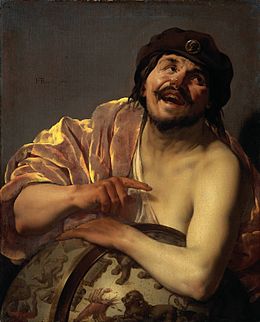
H. ter Brugghen, Democritus (1628)

Thomas Hobbes—arguably the first modern philosopher to offer a deep analysis of the phenomenon—famously defended the first theory. In the Leviathan, he defined laughter as the expression of a sudden glory caused by the comparison between ourselves and those we consider inferior to us in some respect. On the other hand, according to the relief theory championed by Sigmund Freud, laughter is the release of some kind of energy that has built up pressure. In his Der Witz und seine Beziehung zum Unbewußten, Freud argued that laughter unleashes nervous energy that in everyday life is used to repress emotions, to think, or to feel emotions. Finally, the incongruity theory states that we laugh at things that disprove our assumptions in a particular way. In his Kritik der Urteilskraft, Immanuel Kant defended a general version of the incongruity theory, according to which laughter is an effect that arises if a tense expectation is transformed into nothing (Kant specified that it must be nothing and not the positive opposite of the expectation, thus implying that not all that is unexpected is also laughable). Two centuries later, in Le Rire, Henri Bergson presented a more specific version of the incongruity theory. He argued that we laugh when we see something mechanical in something living.

Laughter, however, is not simply one of the many objects of philosophical research. Strong bonds link philosophical research and laughter at a deeper level. Laughter is sometimes used as a defining characteristic of important philosophical figures. Most notably, in one of the letters attributed to Hippocrates, we find a melancholic Democritus who constantly laughs at his fellow citizens because he considers their endeavours completely meaningless. The philosopher laughs at the human condition.

The connection between laughter and philosophy becomes particularly complex when we highlight the similarities between the activity of the philosopher and the comedy writer: both reflect on familiar phenomena; they use critical thought; they step back emotionally from the problem they tackle; and they give us a new outlook on the world.

The goal of this volume of Odradek will be to shape a new and deeper understanding of the phenomenon of laughter, especially in its relation to philosophy; however, we welcome papers from various disciplines.

The topic of the proposals might include, but need not to be restricted to:

  • Laughter, comedy and philosophy in literature
  • Analysis of one or more of the theories of laughter
  • Psychology of laughter
  • Laughter as a social phenomenon
  • Analysis of the figure of the laughing philosopher
  • Analysis of the relationship between comedy and philosophy

Share this:

  • Email a link to a friend (Opens in new window) Email
  • Share on Facebook (Opens in new window) Facebook
  • Print (Opens in new window) Print
  • Share on X (Opens in new window) X
Like Loading...

Pubblicazione volume su Hegel e Husserl di D. Manca

09 Tuesday May 2017

Posted by Stella Ammaturo in suggerimenti eventi

≈ Leave a comment

Tags

Alfredo Ferrarin, Danilo Manca, Esperienza ragione, Fink, hegel, Heidegger, Kant


Con piacere segnaliamo l’uscita del volume del nostro socio fondatore ed ex coordinatore di Zetesis, Danilo Manca, dal titolo Esperienza della ragione. Hegel e Husserl in dialogo, presso Edizioni ETS Pisa, per la collana Dialectica diretta dal prof. Alfredo Ferrarin.

Link diretto al sito della casa editrice dove si possono leggere indice e prefazione al volume.


Share this:

  • Email a link to a friend (Opens in new window) Email
  • Share on Facebook (Opens in new window) Facebook
  • Print (Opens in new window) Print
  • Share on X (Opens in new window) X
Like Loading...

Conference: Reason in Practice, 19-20 may 2017

26 Wednesday Apr 2017

Posted by Danilo Manca in suggerimenti eventi

≈ Leave a comment

Tags

authority, Belief, critical philosophy, Crusius, freedom, Gabriele Gava, History, Kant, Konstantin Pollok, Lea Ypi, Luca Fonnesu, Luigi Filieri, Marcus Willaschek, Mendelssohn, Moral Certainty, Paul Guyer, Pauline Kleingeld, political theory, Practical Justification, Practical Metaphysics, reason's destiny, Religion, responsability, Richard Bellamy, Sofie Møller, Sovereign States

Reason in Practice

Kantian Perspectives on Ethics, Law and Politics

poster download
programme download

European University Institute – 19-20 May, 2017

Cappella – Villa Schifanoia, San Domenico di Fiesole

Organization

Sofie Møller, European University Institute (sofie.moeller@eui.eu)

Luigi Filieri, University of Pisa – Zetesis Research Group (l.filieri7@gmail.com)


Programme

19 May 2017

14:00-14:15 Welcome

14:15-15:35 Pauline Kleingeld (University of Groningen)

Kant’s political theory in 1784

15:35-16:20 Luca Fonnesu (University of Pavia)

Kant on Responsibility

16:20-16:40 Coffee break (Sala Villetta)

16:40-17:25 Luigi Filieri (University of Pisa)

How to Rule Reason’s Destiny

17:25-18:45 Konstantin Pollok (University of South Carolina)

Authority and Self-legislation in Kant’s Critical Philosophy

20 May 2017

9:30-10:50 Paul Guyer (Brown University)

Mendelssohn, Kant, and Freedom of Religion

10:50-11:10 Coffee break (Sala Villetta)

11:10-11:55 Sofie Møller (European University Institute)

The Legal Character of Kant’s Critical Philosophy

12:00-12:45 Gabriele Gava (University of Frankfurt)

Crusius and Kant on Belief, Moral Certainty and Practical Justification

12:45-14:15 Lunch (on invitation, Sala Villetta)

14:15-15:00 Lea Ypi (London School of Economics)

The moral ought in as if history

15:00-15:45 Richard Bellamy (European University Institute)

A European Republic of Sovereign States: A Kantian Vision of the EU

15:45-16:05 Coffee break (Sala Villetta)

16:05-17:25 Marcus Willaschek (University of Frankfurt)

Kant’s Practical Metaphysics

Register here:

– http://www.eui.eu/events/detail.aspx?eventid=132688

Share this:

  • Email a link to a friend (Opens in new window) Email
  • Share on Facebook (Opens in new window) Facebook
  • Print (Opens in new window) Print
  • Share on X (Opens in new window) X
Like Loading...

Giornata di studi: L’estetica tedesca da Kant all’idealismo

06 Monday Feb 2017

Posted by Danilo Manca in suggerimenti eventi

≈ Leave a comment

Tags

Alberto L. Siani, Alfredo Ferrarin, Antropologia dal punto di vista pragmatico, armonia, bello, Cassandra Basile, colori, Critica della capacità di giudizio, critica estetica, Danilo Manca, E.T.A. Hoffmann, Elena Romagnoli, Eleusis, entusiasmo, F. Schlegel, Francesco Rossi, Goethe, Hölderlin, hegel, idealismo, ironia, Kant, Klassik, Leonardo Amoroso, libertà, Lorenzo Sala, Luigi Filieri, Mario Farina, Marta Vero, Novalis, platone, poesia trascendentale, Romanticismo, Romantik, sacro, Schiller, storia dell'estetica

Con piacere segnaliamo la giornata di studi L’estetica tedesca da Kant all’idealismo organizzata nell’ambito del seminario di Estetica (Prof. L. Amoroso) per il dottorato di Pisa-Firenze. La partecipazione è aperta a tutti gli interessati.

locandina-15-febbraio4


Share this:

  • Email a link to a friend (Opens in new window) Email
  • Share on Facebook (Opens in new window) Facebook
  • Print (Opens in new window) Print
  • Share on X (Opens in new window) X
Like Loading...

CFP: Lotze’s back!

01 Wednesday Feb 2017

Posted by Danilo Manca in suggerimenti eventi

≈ Leave a comment

Tags

anthropology, antropologia, fenomenologia, filosofia della natura, filosofia in America, Frege, function of the philosopher, funzione del filosofo, Gestalt psychology, hegel, Herbart, Kant, logic, logica, Logique, Lotze, matérialisme, matematica, Materialism, materialismo, mathématiques, mathematics, métaphysique, metafisica, metaphysics, method of philosophy, metodo della filosofia, néokantisme, neokantianism, neokantismo, phénoménologie, Phenomenology, philosophie classique allemande, philosophie de la nature, philosophy of nature, psicologia della Gestalt, Schelling, scienze naturali, spiritualism, Spiritualisme, spiritualismo

Call for Papers (Versione Italiana)


Lotze’s Back!

La Rivista on-line Philosophical Readings

(https://philosophicalreadings.org/)

a cura di D. De Santis & D. Manca

Rudolf Hermann Lotze nasce a Bautzen il 21 maggio 1817. Medico ed esperto di biologia, fisiologia e psicologia; filosofo, logico e metafisico, si formò all’Università di Lipsia per poi trasferirsi a Gottinga, succedendo a Johann Friedrich Herbart alla cattedra di filosofia. Con i due volumi del System der Philosophie, e i tre tomi che compongono il monumentale Mikrokosmus, Lotze è sicuramente stato il pensatore tedesco più influente della sua generazione (quella che uno studioso ha recentemente indicato come late German Idealism). Insegnante di Frege (e per questo al centro di un aspro dibattito tra Hans Sluga e Michael Dummett riguardante le origini della filosofia analitica), imprescindibile punto di riferimento per il primo Husserl e il giovane Heidegger, Lotze è stato decisivo nello sviluppo della scuola neo-kantiana (da Rickert a Windelband, Natorp, Bauch ed anche Emil Lask). Secondo Sandor Ferenczi, durante le sue lezioni berlinesi di psicologia, Lotze anticipò alcuni temi chiave della futura psicoanalisi freudiana. Pensatore all’apparenza eclettico, in Lotze si esprime in realtà un’esigenza sistematica: egli è forse l’ultimo filosofo a ritenere che il sistema sia il punto di approdo necessario al fine di ottenere la comprensione del mondo.

Dopo anni di oblio, durante i quali è stato per lo più ignorato, o comunque studiato soltanto al fine di meglio comprendere qualche altro pensatore, Lotze sembra essere prepotentemente tornato al centro dell’interesse degli studiosi: il recente Late German Idealism. Trendelenburg and Lotze di F. Beiser (2013), l’imponente Hermann Lotze: An Intellectual Biography (2015) di W. Woodward, e la raccolta di studi Lotze et son héritage. Son influence et son impact sur la philosophie du XXe siècle (2015), a cura di F. Boccaccini, ne sono chiara testimonianza.

Il presente call for papers vuole contribuire a quella che si potrebbe infatti chiamare una Lotze Renaissance, prendendo a pretesto l’anniversario della nascita di questo gigante del pensiero.

Gli interventi potranno riguardare l’intero spettro della riflessione di Lotze, così come i rapporti d’influenza che il suo pensiero intrattiene con le tradizioni filosofiche della fine del XIX secolo e dell’inizio del ‘900, e con le precedenti correnti filosofiche e scientifiche.

Per fare soltanto qualche esempio:

– Logica e matematica nella riflessione di Lotze

– La metafisica

– La filosofia della natura di Lotze e i suoi risvolti antropologici

– La riflessione di Lotze sul metodo della filosofia e sulla funzione del filosofo

– Lotze e la fenomenologia

– Lotze, Frege e l’oggettività del pensiero

– Lotze e il neokantismo

– Lotze e la filosofia classica tedesca (Kant, Schelling, Hegel, Herbart)

– Spiritualismo e materialismo

– Lotze e lo sviluppo delle scienze naturali nel corso del XIX sec.

– Lotze e la psicologia della Gestalt

– Lotze e la filosofia in America

Gli interventi potranno essere scritti in Italiano, Francese, Inglese, Spagnolo o Tedesco, e inviati a:

desantis_daniele@yahoo.it; danilomanca30@gmail.com

Contributors confermati: William Woodward, Riccardo Martinelli


Deadline: 31 Agosto 2017


Call for Papers (English Version)


Lotze’s Back!

Special Issue of the on-line Journal Philosophical Readings

(https://philosophicalreadings.org/)

by D. De Santis & D. Manca

Rudolf Hermann Lotze was born in Bautzen on May 21st, 1817. Lotze was a philosopher and logician; he also had a medical degree and was versed in biology, psychology as well as physiology. He studied at the University of Leipzig, and then moved to Göttingen, succeeding Johann Friedrich Herbart in the chair of philosophy. With the publication of his monumental Mikrokosmus, and the two-volume work System der Philosophie, Lotze became the most important and influential thinker of his generation (the one recently described as late German idealism). His alleged influence on Frege has long been the topic of harsh debates (like the one between H. Sluga and M. Dummett on the objectivity of thought and the origin of the so-called analytic philosophy); his importance for the early Husserl, as well as for Heidegger, is well known and undeniable, like his influence on the neo-Kantian tradition (from Rickert to Windelband, Natorp, Bauch and even Emila Lask). According to Sandor Ferenczi, during his late psychology lectures, Lotze also anticipated some of Freud’s key insights (like the notion of unbewusste Vorstellung). Lotze was a “systematic” thinker, perhaps the last philosopher really to consider the system as the one and only possibility to grasp rationally and understand the world as a whole.

As shown by the recently increased number of publications on Lotze and his philosophy (see for example: Late German Idealism. Trendelenburg and Lotze by F. Beiser (2013), the monumental Hermann Lotze: An Intellectual Biography (2015) by W. Woodward, and the anthology of essays on Lotze et son héritage. Son influence et son impact sur la philosophie du XXe siècle (2015), edited by F. Boccaccini), the interest in this still partially unknown thinker is growing.

The present call for papers would like to contribute to what might be labeled Lotze Renaissance; topics would include:

– Logic and mathematics in Lotze’s philosophy

– Lotze’s metaphysics

– Lotze’s philosophy of nature and anthropology

– The method of philosophy, and the function of the philosopher

– Lotze and the phenomenological tradition

– Lotze, Frege and the objectivity of thought

– Lotze and the neo-Kantian tradition

– Lotze and classical German philosophy (Kant, Schelling, Hegel, Herbart)

– Spiritualism and materialism

– Lotze and the development of natural science in the 19th century

– Lotze and the Gestalt psychology

– Lotze and American philosophy

Contributions can be written in Italian, French, English, Spanish and German, and sent to:

desantis_daniele@yahoo.it; danilomanca30@gmail.com

Invited Contributors: William Woodward, Riccardo Martinelli


Deadline: August 31st, 2017

Appel à contribution (Version française)


Lotze’s Back!


Numéro spécial de la revue életronique Philosophical Readings

(https://philosophicalreadings.org/)

sous la direction de D. De Santis & D. Manca

Rudolf Hermann Lotze est né à Bautzen le 21 mai 1817. Il a été, d’une part, médecin, expert de biologie, de physiologie, de psychologie et, d’autre part, philosophe, logicien et métaphysicien. Il s’est formé à l’Université de Leipzig et s’est établi ensuite à Göttingen, où il a succédé à Johann Friedrich Herbart à la chaire de philosophie. Avec les deux volumes du System der Philosophie, et les trois tomes qui composent le monumental Mikrokosmus, Lotze a certainement été le penseur allemand le plus influent de sa génération (celle qu’un spécialiste a récemment désignée comme late German Idealism). Maître de Frege (et, pour cette raison, au centre d’un âpre débat entre Hans Sluga et Michael Dummett sur les origines de la philosophie analytique), point de référence incontournable du premier Husserl et du jeune Heidegger, Lotze a été décisif pour le développement de l’école néo-kantienne (de Rickert à Windelband, Natorp, Bauch et aussi Emil Lask). D’après Sandor Ferenczi, pendant ses leçons de psychologie berlinoises, Lotze a anticipé certains thèmes-clés de la future psychanalyse freudienne. En ce penseur d’apparence éclectique s’exprime en réalité une exigence systématique: il est sans doute le dernier philosophe à considérer le système comme point d’arrivée nécessaire pour parvenir à la compréhension du monde.

Après des années d’oubli, pendant lesquelles il a été le plus souvent ignoré, ou étudié uniquement pour mieux comprendre quelque autre penseur, Lotze semble être revenu avec force au centre de l’intérêt des spécialistes: le récent Late German Idealism. Trendelenburg and Lotze de F. Beiser (2013), l’imposant Hermann Lotze: An Intellectual Biography (2015) de W. Woodward, et le recueil d’études Lotze et son héritage. Son influence et son impact sur la philosophie du XXème siècle (2015), sous la direction de F. Boccaccini, en constituent un témoignage manifeste.

Le présent appel à contribution entend contribuer à ce que l’on pourrait en effet appeler une Lotze Renaissance, à l’occasion de l’anniversaire de la naissance de ce géant de la pensée.

Les interventions pourront concerner tout le spectre de la réflexion de Lotze, de même que les rapports d’influence que sa pensée entretient avec les traditions philosophiques de la fin du XIXème siècle et du début du XXème, ainsi qu’avec les courants philosophiques et scientifiques précédents.

Pour se limiter à quelques exemples:

– Logique, métaphysique, et mathématiques dans la réflexion de Lotze

– La philosophie de la nature de Lotze et ses implications anthropologiques

– La réflexion de Lotze sur la méthode de la philosophie et sur la fonction du philosophe

– Lotze et la phénoménologie

– Lotze, Frege et l’objectivité de la pensée

– Lotze et le néokantisme

– Lotze et la philosophie classique allemande (Kant, Schelling, Hegel, Herbart)

– Spiritualisme et matérialisme

– Lotze et le développement des sciences naturelles dans le cours du XIXème siècle

– Lotze et la psychologie de la Gestalt

– Lotze et la philosophie en Amérique

Les interventions pourront être rédigées en italien, en français, en anglais, en espagnol ou en allemand, et envoyées à:

desantis_daniele@yahoo.it; danilomanca30@gmail.com

Confirmed Contributors : William Woodward, Riccardo Martinelli

Date limite de soumission: 31 Août 2017

Share this:

  • Email a link to a friend (Opens in new window) Email
  • Share on Facebook (Opens in new window) Facebook
  • Print (Opens in new window) Print
  • Share on X (Opens in new window) X
Like Loading...
← Older posts
Newer posts →

Archivio notizie

Menu

  • ADMISSION
  • Una testimonianza per il futuro dopo la tragedia del coronavirus
  • GROUPS
    • Classical German Philosophy and Phenomenology
    • Philosophies of Image and Imagination
    • The Philosophy of Nature
    • The quarrel between philosophy and poetry
    • The quarrel between the ancients and moderns
    • Theories of Emotions
    • Utopia, the Political Myth, and Rebellion
  • CONFERENCES
    • 2019
      • Gli spazi e i tempi della forma: storia naturale delle rovine
    • 2018
      • Sellars e la filosofia post-kantiana
    • 2017
      • Dialettica della ragione, teleologia e idea di mondo in Kant.
      • La filosofia e il tragico
      • La leggibilità della natura
    • 2016
      • Dialectic and the Ends of Reason
        • Schedule
      • Il tragico nella letteratura tedesca
    • 2015
      • Immaginazione e Giudizio In Kant
        • Schedule
      • MELANCOLIA. Metamorfosi dell’umor nero
        • Introduction
        • Schedule
      • THE WISDOM OF THE ANCIENTS. The German-Jewish Revaluation of Ancient Philosophy
        • Introduction
        • Schedule
    • 2014
      • Hegel and the phenomenological movement
  • CONTACTS
  • EVENTS
  • IDEAS
  • ODRADEK Journal
  • PEOPLE
  • PRESS REVIEW
  • RICORDANDO BARALE

Zetesis FanPage

Zetesis FanPage

I nostri eventi

This slideshow requires JavaScript.

Create a free website or blog at WordPress.com.

Privacy & Cookies: This site uses cookies. By continuing to use this website, you agree to their use.
To find out more, including how to control cookies, see here: Cookie Policy
  • Subscribe Subscribed
    • zetesisproject.com
    • Join 27 other subscribers
    • Already have a WordPress.com account? Log in now.
    • zetesisproject.com
    • Subscribe Subscribed
    • Sign up
    • Log in
    • Report this content
    • View site in Reader
    • Manage subscriptions
    • Collapse this bar
 

Loading Comments...
 

    %d