• Home
  • IDEAS
  • GROUPS
    • Classical German Philosophy and Phenomenology
    • The quarrel between the ancients and moderns
    • The quarrel between philosophy and poetry
    • Theories of Emotions
    • Philosophies of Image and Imagination
    • Utopia, the Political Myth, and Rebellion
    • The Philosophy of Nature
  • EVENTS
  • PEOPLE
  • ADMISSION
  • CONTACTS
  • CONFERENCES
    • 2016
      • Il tragico nella letteratura tedesca
      • Dialectic and the Ends of Reason
        • Schedule
    • 2015
      • CONVEGNO MELANCOLIA
        • Introduction
        • Schedule
      • CONFERENCE ON THE ANCIENTS
        • Introduction
        • Schedule
      • Immaginazione e Giudizio In Kant
        • Schedule
    • 2014
      • Hegel and the phenomenological movement
  • ODRADEK Journal

Author Archives: Danilo Manca

CFP Emotion and Cognition

03 Friday Jun 2016

Posted by Danilo Manca in CFA-CFP

≈ Leave a comment

Tags

Andrea Lavazza, behavioral economics, cognition, emotion, Hume, Kant, moral emotion, morality, neuroeconomics, neuroethics, passion, pathology, philosophy, psychology, Rivista Filosofia e Psicologia

Segnaliamo con piacere il seguente call for papers della RiFP – Rivista internazionale di Filosofia e Psicologia:


Emotions and Cognition: Philosophy, Psychology, and Neuroscience in Dialogue


What is an emotion? What is the relationship between emotion and cognition? How can one best articulate the distinction, if there is one, between cognition and emotion? What is the function of emotion with respect to cognition? And what contribution can neuroscience make to our understanding of emotions and the relationship between cognition and emotion? These are just a few of the key questions addressed by those philosophers, psychologists and neuroscientists who investigate emotional experience.

RiFP – Rivista internazionale di Filosofia e Psicologia, with the support of SINe – Società italiana di Neuroetica e Filosofia delle Neuroscienze, seeks to promote a broad interdisciplinary discussion on these themes for the first issue in 2017. RIFP and SINe invite all scholars who wish to contribute to this discussion to send original manuscripts on the relationship between emotion and cognition, from a theoretical and/or empirical and/or historical approach. The sub-themes of the present call for papers include, but are not limited to:


(a) work that focuses, including from a historical perspective, on the relationship between emotions and knowledge, by defining the possible differences between, or identity of, emotional experiences and cognitive processes. The relationship between emotion and reason has a complex and well-articulated history that has developed around two main perspectives: a Humean perspective that assigns an important role to the “passions”, and a Kantian perspective that, in contrast, downplays the emotions privileging the role of “disembodied” thought. That the emotions play a fundamental role in psychic life and mental processes no matter how the latter are defined, is today considered beyond doubt. Contemporary discussion instead focusses on the nature of the relationship between emotions and cognition in various circumstances. We are especially interested in contributions which provide a diachronic perspective on contemporary research, pointing out blind spots and dead ends in the debate to date, and indicating which avenues of research have the most potential for elucidating our understanding of the interactions between emotion and cognition. We will also welcome contributions that present the most influential contemporary proposals, outlining their strengths and weaknesses in order to provide a taxonomy that helps to map out the current discussion.


(b) work that considers the role of emotions in the genesis and interpretation of psychological “pathology”, explicating which conditions should in fact be defined as “pathological” and which might instead be reinterpreted and re-categorized  (as “normalcy”, “anomaly”, “different cognitive style”). In particular, we welcome contributions which offer new interpretive perspectives on emotional dysfunction and the various kinds of therapeutic modalities for the treatment of dysfunction.


(c) work that explores neurophysiological aspects of emotional experiences, focusing on the central role of the limbic system in producing the emotional experience that structures the behavior of the individual. Both from a neurobiological and a theoretical-interpretative point of view, the properties of the limbic system have received increasing attention leading to modifications in descriptions of this system in current research. Contributions that provide up to date information on current research and debates in this area are especially welcome.


(d) work investigating the connection between morals and emotions, focusing in particular on the links between research in ethics and cognitive neuroscience, which demonstrate that both descriptive and normative theories can and must (or, vice versa, cannot and must not) take into consideration and incorporate  new findings related to the role of brain functions in judgements and behaviors.


(e) work in behavioral economics and neuroeconomics that highlights the complementary and/or antagonistic role(s) of emotion and cognition in decision making. Only several decades ago, economics, considered as an autonomous discipline, tended to reduce decision making to a function based on the simple maximization of individual utility.


Manuscript preparation and submission

Manuscripts should not exceed 9,000 words (including footnotes) and must be submitted through the online submission procedure available on the journal internet site by September 30th, 2016.

Manuscripts written in Italian or English will be considered for publication. An English abstract of max. 150 words and 5 English key-words must be provided. Please, insert the code “Emotion&Cognition2016” in the box “Communications to the Editor” in the online submission form (step 1). Two separate documents should be submitted. The first document must be anonymous and contain only the manuscript and abstract without any identifying information about the author(s). A second document (called “supplementary file”) must be submitted separately (step 3) and include pictures, tabs, title, abstract, the whole manuscript as well as author(s)’ name, affiliation, e-mail, and surface postal address.

After a preliminary assessment by the Editorial Board, submissions undergo a double–blind peer review process. For instructions on how to prepare the manuscript, click on the link “How to ensure a blind review” available on the internet site. The decision will be communicated to the authors within 6 weeks after submission. After manuscript acceptance, an authors’ guideline will be provided to copyedit the final version of the manuscripts.

For further information please email Andrea Lavazza: lavazza67@gmail.com
Share this:

  • Email a link to a friend (Opens in new window) Email
  • Share on Facebook (Opens in new window) Facebook
  • Print (Opens in new window) Print
  • Share on X (Opens in new window) X
Like Loading...

Lezione Prof. Amoroso su Schelling a Firenze

17 Tuesday May 2016

Posted by Danilo Manca in suggerimenti eventi

≈ Leave a comment

Tags

Germanistica, Heinz Widerpost, Leonardo Amoroso, Romanticismo, Schelling

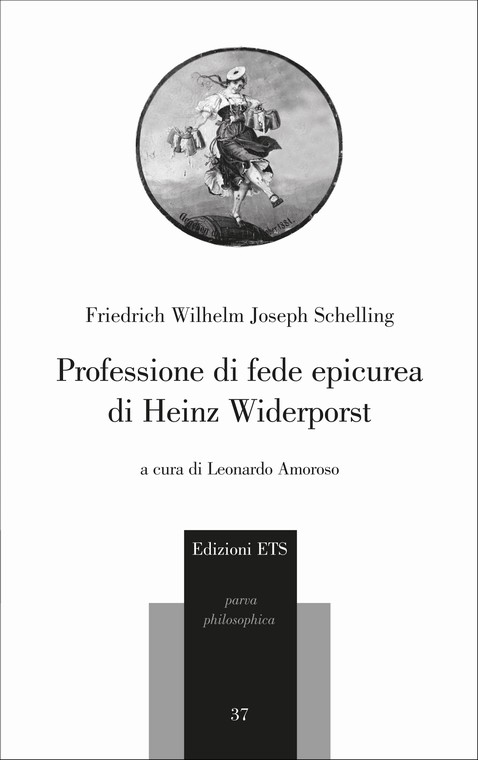
Segnaliamo con piacere che giovedì prossimo, 19 maggio, alle ore 15, il Prof. Leonardo Amoroso terrà a Firenze, in Via S. Reparata 93, aula 20 (I piano), nell’ambito del dottorato di Germanistica, una lezione su Schelling e i sogni romantici. A proposito di un poemetto «epicureo».

http://www.edizioniets.com/scheda.asp?n=9788846735706

Widerpost

Share this:

  • Email a link to a friend (Opens in new window) Email
  • Share on Facebook (Opens in new window) Facebook
  • Print (Opens in new window) Print
  • Share on X (Opens in new window) X
Like Loading...

A sostegno dell’Associazione “The Thing”: Riaprire il Teatro Lux

21 Sunday Feb 2016

Posted by Danilo Manca in sostegno Lux

≈ Leave a comment

Tags

cultura, forza, Gabriele De Luca, giustizia, sostegno, Teatro Lux Pisa, Zetesis

Teatro-Lux-Giardino1-630x210

E’ capitato diverse volte a Zetesis di collaborare con il Teatro Lux.
Dopo un’intera giornata di serrato convegno, sul calar della sera, è bastata l’atmosfera del giardino interno al Teatro Lux per creare quell’alchimia tra studenti, ricercatori e docenti che nell’accademia italiana purtroppo stenta ad esistere e che Zetesis cerca spasmodicamente in ogni evento che organizza.

Dal 31 gennaio scorso, in seguito all’immane tragedia che oramai tutta la città (e non solo) conosce, il Teatro è sotto sequestro. La giustizia deve fare il suo corso, ovviamente. Ma Zetesis vuole unirsi a quel coro di persone, speriamo sempre più numeroso, che vogliono assicurarsi che il Teatro Lux sia riaperto, il più presto possibile.

All’Associazione “The Thing” e in particolare a Gabriele De Luca, che consideriamo parte di noi, va tutto il nostro sostegno e affetto per una situazione in un cui sfortunatamente si sono trovati catapultati.

I frammenti di vetro di una sera arrivata in anticipo sono caduti nella loro casa. Ma proprio per non dimenticare e per non darla vinta alla morte, c’è bisogno che la sera torni a calare in quel giardino, e il sipario del Lux sia riaperto.

Share this:

  • Email a link to a friend (Opens in new window) Email
  • Share on Facebook (Opens in new window) Facebook
  • Print (Opens in new window) Print
  • Share on X (Opens in new window) X
Like Loading...

Primo incontro Seminario di studi Hegeliani

22 Friday Jan 2016

Posted by Danilo Manca in incontri, suggerimenti eventi

≈ Leave a comment

Tags

Danilo Manca, dialettica, Guido Frilli, hegel, Quarrel between the Ancients and the Moderns, ragione

Lunedì 25 gennaio, alle ore 15,30 presso Aula 1 al I piano di Palazzo Ricci avrà luogo il primo incontro del Seminario di Studi Hegeliani, in preparazione del convegno su “La dialettica e i fini della ragione”, che si terrà a Pisa tra 8 e 10 giugno 2016.

Intervengono:

Guido Frilli, La naturalità della ragione in Hegel

Danilo Manca, Hegel e la disputa tra Antichi e Moderni


Share this:

  • Email a link to a friend (Opens in new window) Email
  • Share on Facebook (Opens in new window) Facebook
  • Print (Opens in new window) Print
  • Share on X (Opens in new window) X
Like Loading...

Una firma per sostenere le attività di Zetesis

19 Tuesday Jan 2016

Posted by Danilo Manca in Senza categoria

≈ Leave a comment

Tags

dialettica, filosofia, immaginazione, Immagine, Letteratura, Razionalità, Tragico, Università di Pisa, Zetesis

Cara studentessa dell’Università di Pisa

Caro studente dell’Università di Pisa

In questi giorni, sino al 9 febbraio, si raccolgono le firme per sostenere le attività studentesche per l’anno 2016.

Ogni anno, il Consiglio degli studenti dell’Università di Pisa finanzia attività organizzate da studentesse e studenti dell’Università.

Grazie a questi finanziamenti, negli ultimi anni Zetesis ha avuto la possibilità di organizzare seminari, conferenze, laboratori, giornate di studio e di stampare a volte anche le relazioni di alcuni di questi eventi. Gli eventi passati sono i seguenti:

  • Organizzazione del Laboratorio di filosofia della letteratura (2013, 2015)
  • Stampa del volume Il velo scolpito. Dialoghi tra filosofia e letteratura (2013)
  • Stampa del volume Il riflesso della finzione. Saggi su filosofia e letteratura tra Settecento e Novecento (2015)
  • Convegno su “Hegel and the Phenomenological Movement” (2014)
  • Conferenza su “The Wisdom of the Ancients” (2015)

Ti chiediamo, perciò, di aiutarci a continuare in questa nostra attività sostenendo le richieste che abbiamo avanzato quest’anno.

Per fare ciò è necessario seguire questa procedura:

1. andare sul seguente portale http://attivitastudentesche.adm.unipi.it/,
2. entrare con la propria password Alice,
3. cliccare sulla voce a lato sinistro Adesioni (a volte esce automaticamente la facciata delle adesioni)4. Selezionare la categoria di attività, ovvero per quanto ci riguarda la categoria “Pubblicazioni, riviste, giornali” o la categoria “Conferenze, seminari, mostre”

5. Selezionare l’attività a cui si vuole aderire, ovvero:

– Convegno sulla nozione di dialettica (RIF 1265), che si terrà tra 8-10 giugno 2016, per ulteriori informazioni clicca qui, e sarà anticipato da un seminario propedeutico di cui daremo presto notizia.
– Stampa relazioni del Laboratorio di forme e filosofia della letteratura (RIF 1270), che quest’anno sarà dedicata al tema della “Coscienza tragica”, con protagonisti autori come Hölderlin, Kierkegaard, Camus, Beckett.
– “Stampa relazioni del Laboratorio di filosofie dell’immagine e dell’immaginazione (RIF 1271)”, che avrà come protagonisti autori quali Kant, Hegel, Husserl, Benjamin.
– “Seminari sul tema della storia dell’idealismo e modelli di razionalità (RIF 1272)”, che consisteranno in una serie di giornate di studi che coinvolgeranno in particolare le redazioni di Zetesis che si occupano di “Filosofica classica tedesca e Fenomenologia”, “La disputa tra Antichi e Moderni”, “Teorie delle emozioni”.
6. e poi cliccare sul tasto “Conferma“
L’adesione è libera, chiunque sia iscritto all’Università di Pisa può firmare; è volontaria, firmare o meno non preclude né garantisce qualcosa, e ciascuno può aderire solo ad un’attività, una volta cliccato il tasto “CONFERMA” non potrà aderire ad altra attività, né modificare la propria adesione
Ti ringraziamo,
Il Direttivo di Zetesis
Per ogni ulteriore informazione non esitare a contattarci all’indirizzo email: zetesis@unipi.it


Share this:

  • Email a link to a friend (Opens in new window) Email
  • Share on Facebook (Opens in new window) Facebook
  • Print (Opens in new window) Print
  • Share on X (Opens in new window) X
Like Loading...
← Older posts
Newer posts →

Archivio notizie

Menu

  • ADMISSION
  • Una testimonianza per il futuro dopo la tragedia del coronavirus
  • GROUPS
    • Classical German Philosophy and Phenomenology
    • Philosophies of Image and Imagination
    • The Philosophy of Nature
    • The quarrel between philosophy and poetry
    • The quarrel between the ancients and moderns
    • Theories of Emotions
    • Utopia, the Political Myth, and Rebellion
  • CONFERENCES
    • 2019
      • Gli spazi e i tempi della forma: storia naturale delle rovine
    • 2018
      • Sellars e la filosofia post-kantiana
    • 2017
      • Dialettica della ragione, teleologia e idea di mondo in Kant.
      • La filosofia e il tragico
      • La leggibilità della natura
    • 2016
      • Dialectic and the Ends of Reason
        • Schedule
      • Il tragico nella letteratura tedesca
    • 2015
      • Immaginazione e Giudizio In Kant
        • Schedule
      • MELANCOLIA. Metamorfosi dell’umor nero
        • Introduction
        • Schedule
      • THE WISDOM OF THE ANCIENTS. The German-Jewish Revaluation of Ancient Philosophy
        • Introduction
        • Schedule
    • 2014
      • Hegel and the phenomenological movement
  • CONTACTS
  • EVENTS
  • IDEAS
  • ODRADEK Journal
  • PEOPLE
  • PRESS REVIEW
  • RICORDANDO BARALE

Zetesis FanPage

Zetesis FanPage

I nostri eventi

This slideshow requires JavaScript.

Create a free website or blog at WordPress.com.

Privacy & Cookies: This site uses cookies. By continuing to use this website, you agree to their use.
To find out more, including how to control cookies, see here: Cookie Policy
  • Subscribe Subscribed
    • zetesisproject.com
    • Join 27 other subscribers
    • Already have a WordPress.com account? Log in now.
    • zetesisproject.com
    • Subscribe Subscribed
    • Sign up
    • Log in
    • Report this content
    • View site in Reader
    • Manage subscriptions
    • Collapse this bar
 

Loading Comments...
 

    %d